What should marketing leaders know about AI search for 2027 planning?


Why it matters
- AI-search planning for 2027 should use separate budgets for earned visibility, Google AI placements, conversational advertising and measurement because published forecasts measure different markets.[12]
- Gartner’s 15.3% AI-budget figure is not a GEO allocation, while Branch’s 25% and 50% figures describe intended enterprise spending rather than audited expenditure.[1]
- Google expanded AI-search advertising through pilots, tests and staged country rollouts during 2026, so teams should budget for controlled experiments rather than assume universal availability.
- OpenAI moved from a US ChatGPT ads test in February 2026 to Ads Manager and reported availability in 89 countries by October, but access and measurement remain date- and market-specific.[17]
- Academic research supports measuring AI-search visibility and source selection separately from traffic, conversions and revenue.[10]
In this brief7 sections
As of 17 November 2026, the evidence supports a segmented AI-search plan—not one blended “GEO budget.” Forecasts cover different markets, surveys mostly measure intent, Google and OpenAI are still expanding advertising in stages, and academic research measures visibility rather than revenue.[1]
What happened in AI search during 2026?
Forecasts became more specific—but not interchangeable
Several forecasts published or available in 2026 point to continued growth in AI-mediated discovery, but they measure different things.
- Gartner’s forecast says public LLM adoption could produce a 2x increase in PR and earned-media budgets by 2027; it does not forecast total AI-search advertising spend.[2]
- Forrester describes conversational advertising as becoming a multibillion-dollar channel and moving beyond niche experiments by 2027, but the public forecast does not provide a precise dollar value.[3]
- eMarketer forecasts US AI-search advertising at $2.08 billion in 2026, representing 1.3% of US search-ad spending, and $25.93 billion by 2029, representing 13.6%.[4]
- The public eMarketer material does not publish a specific 2027 value, so a 2027 number should not be inferred by interpolating between 2026 and 2029.[5]
- Gartner separately forecast in February 2024 that traditional search volume could fall 25% by 2026 because of AI chatbots and other virtual agents; this is a dated forecast, not an observed 2026 result or a 2027 budget estimate.[6]
For CMOs, the practical distinction is essential: earned media, conversational advertising, AI-search advertising and agentic purchasing are adjacent but not equivalent budget categories.
Marketer interest increased, but execution remained uneven
2026 surveys show strong interest in AI search without establishing a common spending benchmark.
Gartner’s 2026 CMO Spend Survey, released on 11 May 2026, found that respondents allocated an average 15.3% of marketing budgets to AI overall, while only 30% said their organizations were ready to scale AI capabilities.[7] The survey did not identify a separate GEO or AI-search allocation.[1][8]
Semrush reported on 3 June 2026 that 38% of respondents planned to invest in AEO or GEO and 25% planned to invest in AI-visibility tools.[9] Only 22% said AI search and SEO were fully integrated across strategy, execution and reporting.[9]
Branch’s survey of 300 US enterprise marketing, growth and digital leaders, published on 31 March 2026, found that 98% were already optimizing for AI search or planned to do so within 12 months.[10] It also reported that 65% planned to dedicate at least 25% of their 2026 marketing budget to AI-search optimization, while 28% planned to dedicate more than half.[10]
Those Branch figures are self-reported intentions, not audited expenditures. The same survey found measurement gaps: 26% could not track AI discovery through to conversion, and 24% lacked capable analytics tools.[10]
Scribewise reported that 45% of surveyed US marketing and PR professionals were testing brand visibility across AI platforms, 33% planned to use outside agency support for GEO, and 46% planned to increase investment in AI-visibility monitoring technology.[5] Northwestern University’s Spiegel Research Center reported that 88% of its respondents were very or somewhat likely to allocate resources to AI Overviews or GEO within 12 months.[8]
These surveys use different samples and definitions. Their results indicate planning activity, awareness and intent—not one comparable, realized GEO budget percentage.[8][1]
Google expanded AI-search advertising in stages
Google’s 2026 announcements show a progression from pilots and tests toward broader availability.
- On 11 January 2026, Google introduced Direct Offers as a pilot that allowed retailers to place relevant discounts in AI Mode; Google said the pilot could later expand to bundles and free shipping.[11]
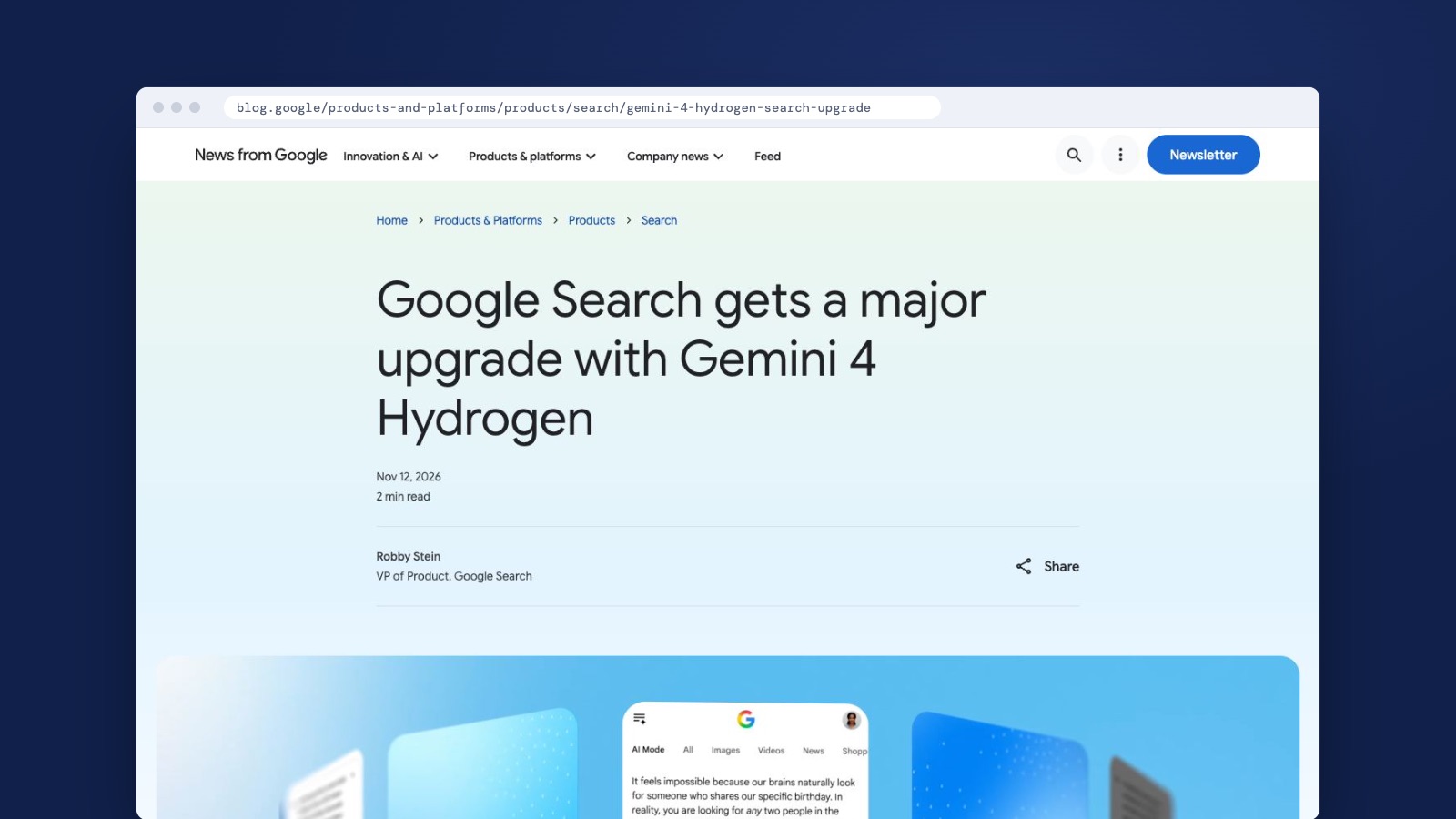
- On 20 May 2026, Google announced tests of Gemini-built Conversational Discovery ads and Highlighted Answers in AI Mode. The formats included an AI-generated explainer and a “Sponsored” label.[12][13]
- On 28 October 2026, Google said AI Mode ads were scaling in Australia, Canada, India, Kenya, Malaysia, New Zealand, Nigeria, Pakistan, the Philippines and Singapore.[14]
- Google also said multiturn ads for follow-up queries were launching in the United States, while Brazil, Mexico and the United Kingdom were listed for planned fourth-quarter expansion rather than completed rollout.[14]
- Google’s Ads Help documentation says existing Search, Shopping and Performance Max campaigns are eligible for ads in AI Overviews and AI Mode.[12]
Google says performance metrics for these experiences appear in standard campaign reports, with triggering queries available in aggregate Search terms reporting.[12] The reviewed documentation does not establish a separate AI-only placement report or answer whether advertisers can independently target or opt out of every AI placement.[12]
For 2027 planning, AI-search advertising should therefore be treated as a set of market- and format-specific tests, not as a universally available inventory type.[12]
OpenAI moved from a limited test toward broader advertising access
OpenAI began a US advertising test on 9 February 2026 for logged-in adults using the Free and Go plans.[15] The initial announcement said ads would not influence answers and that conversations would remain private from advertisers.[15]
The initial test excluded Plus, Pro, Business, Enterprise and Education users.[15] Advertisers initially received aggregate views and clicks rather than users’ private conversations.[15]
OpenAI later said Ads Manager launched in May 2026 for small and medium-sized businesses.[16] The described capabilities included CPC and outcome-optimized bidding, Pixel and Conversions API support, product feeds, geographic and platform targeting, and custom audiences.[16]
In an announcement dated 21 October 2026, OpenAI said ads were available in 89 countries after expansion to 26 additional countries.[17] It also reported that more than 100,000 advertisers had run campaigns since launch.[17] OpenAI said ads appeared on Free and Go while Plus, Pro and Enterprise remained ad-free.[17]
The product therefore changed materially during 2026: access, geography, buying tools and measurement options in the October announcement were not the same as those in the February test.[17] Any 2027 business case should record the market, user plan, buying route, bidding objective and measurement capability used in each test.[1]
Why does this matter for 2027 budgets and teams?
AI budgets should not be treated as GEO budgets
Gartner’s 15.3% figure applies to AI spending broadly, not AI search.[7] Branch’s figures describe intended AI-search allocations among enterprise respondents, not audited expenditure.[10] Semrush’s figures describe planned investment areas and integration levels, not return on investment.[1]
A 2027 planning model should separate at least four lines:
- Organic and earned visibility: content, technical SEO, digital PR and communications.
- Google AI-search advertising: existing campaign eligibility, AI Mode tests and AI Overviews.
- Conversational advertising: ChatGPT or other AI-assistant inventory where access is confirmed.
- Measurement and operating capability: analytics, experimentation, governance and reporting.
This structure prevents an earned-media forecast from being used as a paid-media forecast and prevents a broad AI budget from being presented as a GEO allocation.[1]
Visibility should be measured separately from commercial impact
The 2024 ACM SIGKDD paper GEO: Generative Engine Optimization reported experimental visibility gains of up to 40%.[18] It also stated that the effectiveness of optimization strategies varies across domains.[18]
That result concerns visibility in generative-engine responses. It does not demonstrate a corresponding increase in website traffic, leads, sales or conversion rate.[18]
A 2026 ACM SIGIR study compared Google Search, Google AI Overviews and Gemini Flash 2.5 using 11,500 user queries.[19] AI Overviews appeared above organic results for 51.5% of representative real-user queries, and the systems’ source sets had average Jaccard similarity below 0.2.[19]
The study also reported that sites blocking Google’s AI crawler were less likely to be retrieved by AI Overviews.[19] It found that AI Overviews were less consistent across repeated runs and small changes to queries.[19]
The implication for measurement is straightforward: track answer visibility, citations, crawlability, qualified traffic and conversions as separate outcomes.[10]
Ownership and integration are budget decisions
Semrush’s finding that only 22% of respondents had fully integrated AI search and SEO indicates an operating-model gap, not merely a tooling gap.[9] Branch’s reported inability among some respondents to connect AI discovery to conversion points to a measurement gap as well.[10]
A 2027 plan should assign ownership across marketing, SEO, content, communications, paid media, analytics and legal or privacy teams. It should also define:
- Which AI surfaces are in scope.
- Which markets and customer journeys matter.
- Who owns prompt and answer monitoring.
- How cited sources and content gaps are prioritized.
- Which conversions count as business outcomes.
- How paid tests are separated from organic visibility.
- When an experiment is expanded, paused or ended.
The available evidence supports this operating structure, but it does not establish a universal team size, tool stack or budget percentage.[8][1]
What is confirmed, and what is not?
Confirmed or directly reported
The following points are supported by dated announcements, surveys or published studies:
- Google expanded AI-search advertising through pilots, tests and additional country rollouts during 2026.[12]
- Existing Google Search, Shopping and Performance Max campaigns can be eligible for ads in AI Overviews and AI Mode.[12]
- OpenAI moved from a limited US test to Ads Manager, broader buying capabilities and availability in 89 countries by October 2026.[17]
- Marketer surveys reported strong interest in AI-search investment alongside incomplete integration and measurement.[8]
- Academic research reported visibility effects and meaningful differences between traditional and generative search sources.[5][20]
Not confirmed by the available evidence
The following claims should not be presented as established facts:
- A single standard percentage for a 2027 GEO budget.
- A specific 2027 US AI-search advertising figure from the public eMarketer material.[20]
- A guaranteed revenue or conversion lift from GEO visibility improvements.[1][19]
- Universal availability of every Google AI ad format in every market.[21][22]
- Equivalent ChatGPT advertising access, reporting or eligibility across all countries and subscription plans.[17]
- A direct causal relationship between appearing in an AI answer and generating a sale.[5][23]
2026 timeline: the changes CMOs should carry into 2027
| Date | Development | Planning meaning |
|---|---|---|
| 11 January 2026 | Google introduced Direct Offers as an AI Mode pilot.[13][11] | Treat discount and commerce features as pilots until availability is confirmed. |
| 9 February 2026 | OpenAI began a US ChatGPT ads test for logged-in Free and Go users.[15] | Record plan eligibility and geography in any media test. |
| 31 March 2026 | Branch published enterprise AI-search survey findings, including planned budget allocations and measurement gaps.[10] | Separate intent from realized spend and assess conversion tracking. |
| May 2026 | OpenAI launched Ads Manager for small and medium-sized businesses.[16] | Evaluate self-service buying and conversion tools separately from the initial test. |
| 20 May 2026 | Google announced tests of Conversational Discovery ads and Highlighted Answers in AI Mode.[13] | Budget for controlled format tests rather than assumed scale. |
| 3 June 2026 | Semrush reported that 22% of respondents had fully integrated AI search and SEO.[9] | Fund workflow ownership and reporting integration, not only content production. |
| 2026, date not published in report | Gartner reported 15.3% average AI budget allocation and 30% readiness to scale AI.[1][7] | Do not relabel broad AI spending as GEO spending. |
| 21 October 2026 | OpenAI reported ads in 89 countries and more than 100,000 advertisers since launch.[17] | Recheck country access, plan eligibility and measurement before 2027 commitments. |
| 28 October 2026 | Google announced AI Mode ad scaling in ten additional markets and US multiturn ads.[14] | Maintain a market-by-market rollout register. |
| 17 November 2026 | This brief separates forecasts, survey intentions, product rollouts and academic evidence for 2027 planning. | Use labeled assumptions rather than one blended AI-search forecast. |
Background: what “AI search” includes in this brief
“AI search” refers here to search and discovery experiences in which an AI system generates, summarizes or mediates answers, recommendations or follow-up interactions. The evidence reviewed includes Google AI Overviews, Google AI Mode, ChatGPT advertising, generative-engine visibility and AI-mediated discovery.[20][24]
“GEO” or “AEO” refers to efforts intended to improve a brand’s presence, mention or citation in generative or answer-oriented search results. The cited research measures visibility and source retrieval, while the surveys measure awareness, intended investment or organizational integration.[2]
The terms should not be treated as synonyms for all AI spending, all paid search, traditional SEO or revenue attribution.[1][5]
How should CMOs build an AI-search plan for 2027?
A defensible plan can follow five steps:
- Create separate budget categories. Distinguish organic and earned visibility, Google AI-search placements, conversational advertising, and measurement infrastructure.[12]
- Set a baseline before scaling. Record current visibility, cited sources, qualified traffic, conversions and revenue where available.[10]
- Run market-specific paid tests. Document format, country, campaign type, eligibility, bidding objective and reporting view for every Google or OpenAI experiment.[16]
- Connect content and communications workflows. Use AI-search findings to coordinate technical SEO, editorial content, digital PR and reputation work rather than creating an isolated GEO function.[10][8]
- Use stage gates. Expand only when a test shows reliable delivery, valid measurement and a business outcome that is distinct from ordinary search performance.[11][15]
The evidence does not justify a single 2027 AI-search percentage. It does justify a measurement-led plan with explicit categories, assigned owners and dated assumptions.[9]
Frequently asked questions
How much should a company budget for AI search in 2027?
No published source in the reviewed material establishes a universal 2027 AI-search or GEO budget percentage.[8] Gartner’s 15.3% figure covers AI overall, while Branch’s higher figures describe enterprise respondents’ intentions rather than audited spending.[1]
Is GEO the same as SEO?
GEO concerns visibility in generative or answer-oriented search experiences, while SEO traditionally covers visibility in search-engine results more broadly.[5] The available evidence supports coordinating the two disciplines, but Semrush reported that only 22% of respondents had fully integrated AI search and SEO in 2026.[9]
Will AI search replace Google search advertising in 2027?
The reviewed sources do not establish that AI search will replace traditional search advertising in 2027.[20][24] Google is expanding AI Mode and AI Overview advertising while maintaining eligibility through existing Search, Shopping and Performance Max campaigns.[12]
Does appearing in an AI answer increase revenue?
The cited academic research demonstrates visibility and source-selection effects, not a guaranteed revenue or conversion increase.[10][2] Revenue impact should therefore be tested separately using qualified traffic, leads, sales and other agreed commercial outcomes.[1]
What should CMOs measure in AI search?
CMOs should measure AI-answer visibility, brand mentions, citations, cited sources, crawlability, qualified traffic and conversions as distinct metrics.[10][5] They should also record market, platform, campaign format and eligibility because Google and OpenAI changed access and rollout conditions during 2026.
Sources
- 1Marketing Contracts Under Economic Pressure Despite Growing Value and AI Gains — cmosurvey.org
- 2Communications Predictions for 2026 | Gartner — gartner.com
- 3Predictions 2027: Big Media Growth Engines Hit The Limit And Pivot — forrester.com
- 4AI search ads surge forward while advertisers wait for the proof — emarketer.com
- 5Moving fast, flying blind: 2026 AI search survey — scribewise.com
- 6Gartner Predicts Search Engine Volume Will Drop 25% by 2026, Due to AI Chatbots and Other Virtual Agents — gartner.com
- 7Gartner 2026 CMO Spend Survey Finds CMOs Allocate 15.3% of Marketing Budgets to AI, But Only 30% Are Ready to Scale AI Capabilities — gartner.com
- 8ARITIFICIAL INTELLIGENCE IN SEARCH MARKETING 2026 — spiegel.medill.northwestern.edu
- 9Only 22% of marketers have fully integrated AI search and SEO [Study] — semrush.com
- 10AI Search in 2026: Key Findings From 300 Enterprise Leaders | Branch — branch.io
- 11New tech and tools for retailers to succeed in an agentic shopping era — blog.google
- 12About ads in AI-powered experiences in Google Search - Google Ads Help — support.google.com
- 13New ad formats built with Gemini coming to Google Search — blog.google
- 14Ads in AI Mode expand to 10 new countries — blog.google
- 15Testing ads in ChatGPT | OpenAI — openai.com
- 16A milestone in expanding access to AI | OpenAI — openai.com
- 17ChatGPT Ads expands to 26 new countries as over 100,000 advertisers have used the platform | OpenAI — openai.com
- 18GEO: Generative Engine Optimization | Proceedings of the 30th ACM SIGKDD Conference on Knowledge Discovery and Data Mining — dl.acm.org
- 19How Generative AI Disrupts Search: An Empirical Study of Google Search, Gemini, and AI Overviews | Proceedings of the 49th International ACM SIGIR Conference on Research and Development in Information Retrieval — dl.acm.org
- 20US AI Search-Adjacent Ad Spending Forecasts, Estimates, & Historical Data — emarketer.com
- 21Ads in AI Mode - Accelerate with Google US — business.google.com
- 22AI advertising booms as audiences and spending shift away from traditional search — emarketer.com
- 23Direct Offers - Accelerate with Google US — business.google.com
- 24US AI Advertising Forecast 2026 — emarketer.com