Five things to know
1.What happened in AI search this week (November 10-16, 2026)?
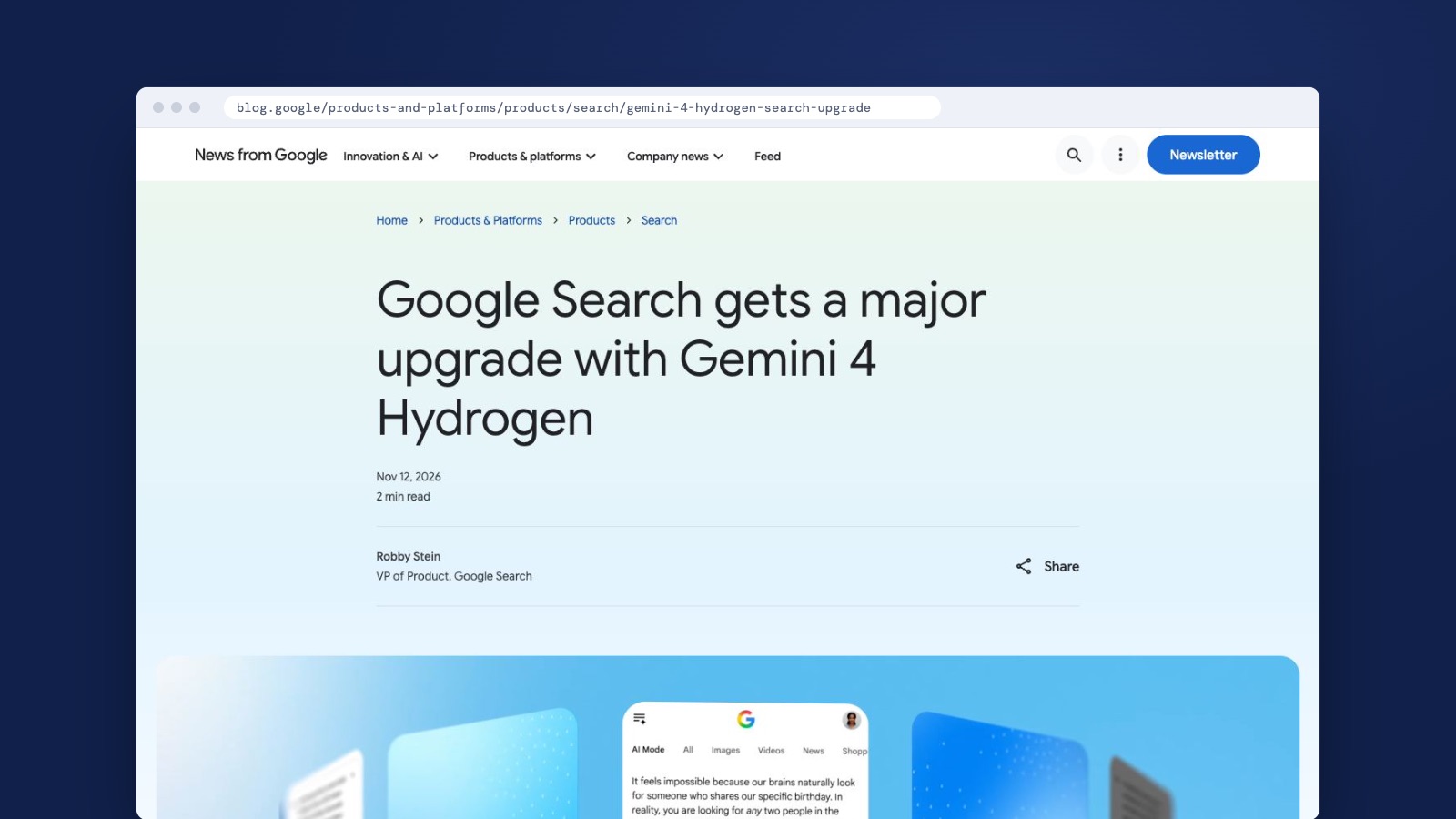
Why it matters: Google is positioning AI Mode as a broader research interface rather than a feature limited to short question-and-answer exchanges.

Albrecht Lippky
Five things to know
Why it matters: Google is positioning AI Mode as a broader research interface rather than a feature limited to short question-and-answer exchanges.
AI search news this week centered on richer Google AI answers, more user control over AI results, and the expansion of ChatGPT and Perplexity into business discovery, advertising, payments, and monitoring.
Why it matters: Google is positioning AI Mode as a broader research interface rather than a feature limited to short question-and-answer exchanges.
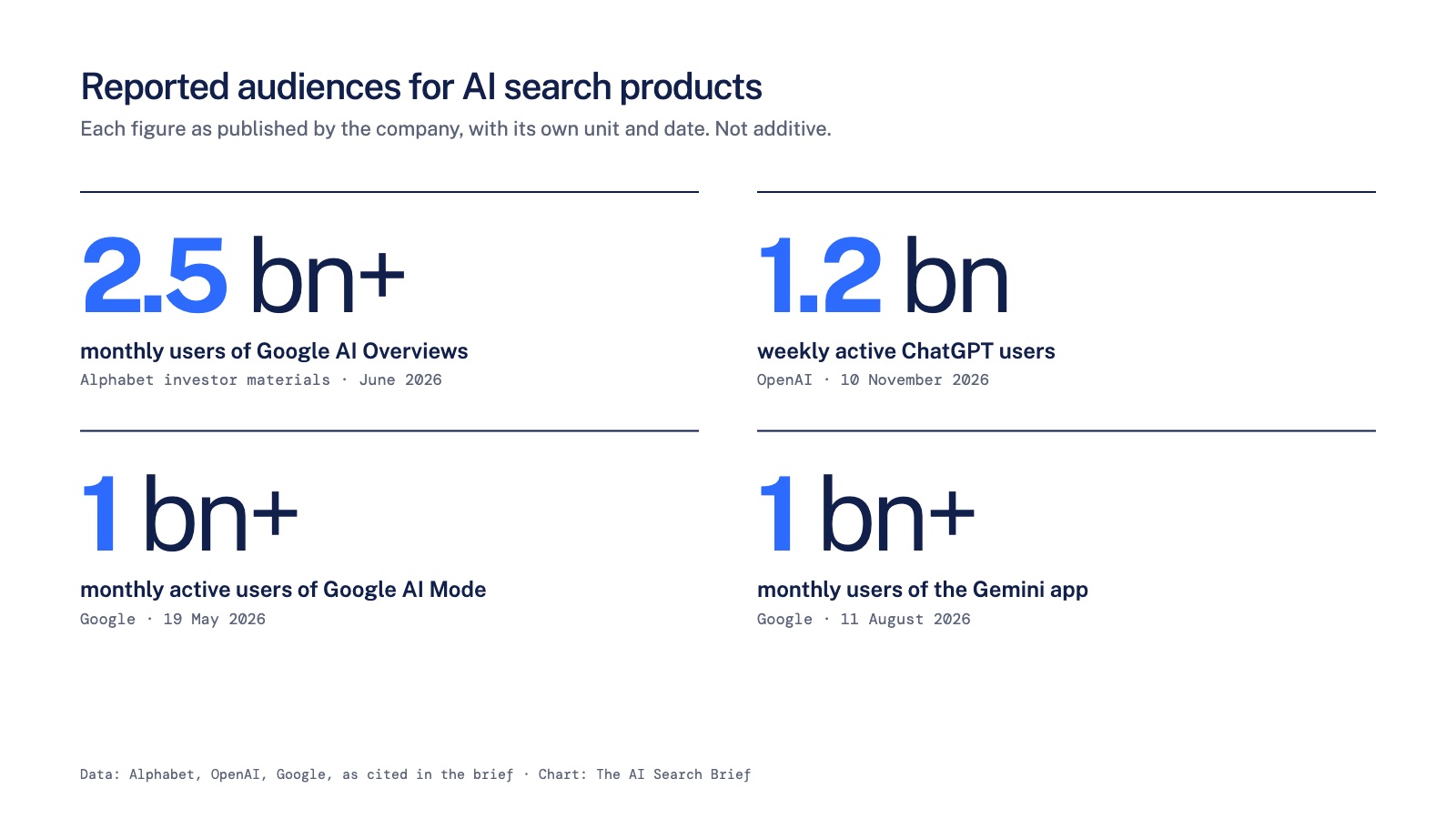
Go deeper (8 min. read) As of 17 November 2026, the biggest published audience number is Google AI Overviews at more than 2.5 billion monthly users, while ChatGPT reports 1.2 billion weekly active users and Google says AI Mode has more than 1 billion monthly active users.
Why it matters: Large user totals establish that AI search has become a mass-market distribution channel, but they do not show how often users click, buy or visit a publisher.
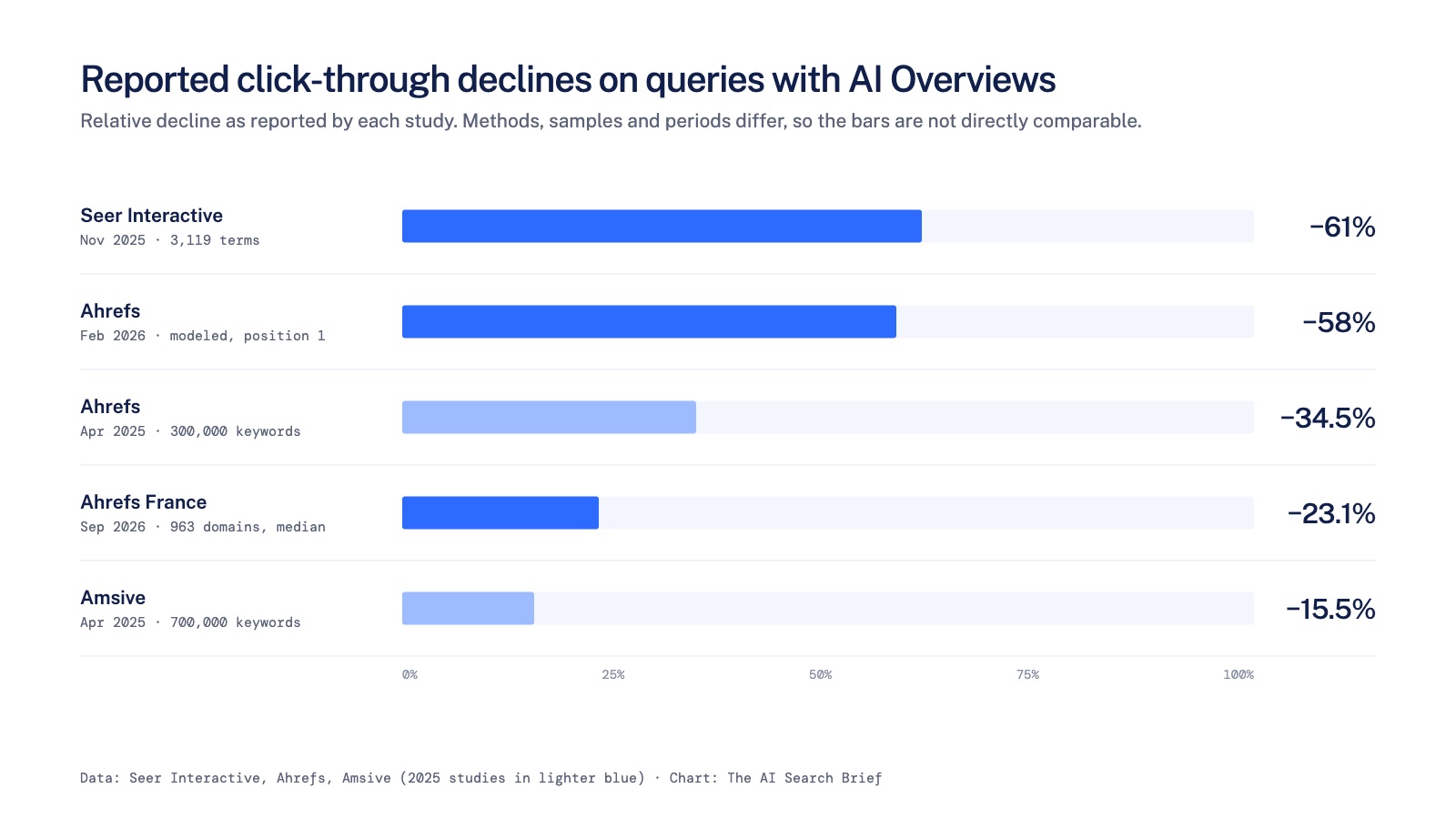
Go deeper (7 min. read) Google AI Overviews (AIOs) reduce external organic clicks in at least some exposed-query settings, but the public evidence does not support one universal “2026 traffic-loss” percentage.
Why it matters: AIOs change the search result page before a user reaches an organic listing.
Go deeper (11 min. read) As of 17 November 2026, the evidence supports a segmented AI-search plan—not one blended “GEO budget.”
Why it matters: AI-search planning for 2027 should use separate budgets for earned visibility, Google AI placements, conversational advertising and measurement because published forecasts measure different markets.
Go deeper (10 min. read) The short answer is that, as of 17 November 2026, the EU AI Act governs several different parts of AI search rather than creating one universal “AI search law”: general-purpose AI model obligations are live, Article 50 transparency obligations generally apply, and competition authorities are separately examining Google’s AI search practices under the DMA and Article 102 TFEU.
Why it matters: The practical consequence is that “EU AI Act compliance” is not a single checklist for a marketing department.
Go deeper (11 min. read)